Table of Contents
In the heart of the Qatari desert, specifically in the Umm Salal Mohammed area, the Barzan Towers rise proudly as a living testament to the brilliance of traditional architecture and the ingenuity of the Qatari people in protecting their resources and privacy. These towers are far from being silent stone structures; they are vocal chapters of Qatar’s history, telling stories of defense, surveillance, and celestial observation. Barzan Towers blend the charm of local engineering with the natural beauty of the desert environment, creating a cultural and touristic landmark worthy of attention and reflection. This article takes you on an in-depth journey into the architectural masterpiece—from its origins and functions to its symbolic meaning in the Qatari consciousness and its renewed role in Qatar National Vision 2030.
Looking for apartments for rent in Umm Salal Mohammed? Sakan Real Estate Platform offers you the best options at competitive prices! Whether you’re looking for a cozy family apartment or a commercial rental space in a prime location, we’ve got everything you need in Umm Salal Mohammed. Discover rental properties with easy access, a peaceful atmosphere, and comprehensive services. Don’t miss the opportunity—contact Sakan Real Estate Platform today and get the offer that suits you best!
What Are the Barzan Towers and Where Exactly Are They Located?
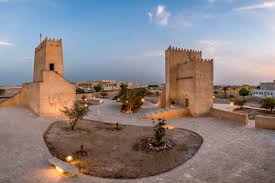
Barzan Towers are located in the Umm Salal Mohammed area, north of the Qatari capital, Doha. Strategically positioned on elevated ground, they were built more than 15 meters above ground level, allowing guards and observers to monitor a wide surrounding area. Today, they stand as a living symbol of traditional Qatari architecture and cultural heritage—elements the country is committed to preserving for future generations.
Why Are They Called “Barzan Towers”? What Is the Linguistic and Historical Significance?
The name “Barzan” comes from the Arabic word meaning “high” or “elevated,” which aptly describes the towers’ original purpose. Built on high terrain to allow long-distance visibility, they played a vital role during times of unrest or conflict, being used to monitor enemy movements or protect water sources. The name reflects a cultural emphasis on watchfulness and spatial control—attributes that have contributed to the towers’ historical fame.
When Were the Barzan Towers Built, and Who Commissioned Their Construction?
The Barzan Towers date back to the late 19th or early 20th century. They were constructed under the leadership of Sheikh Mohammed bin Jassim Al Thani, one of Qatar’s most prominent historical figures. These towers were part of an integrated defensive system designed to protect local communities and nearby water sources from Bedouin raids or any external threats. It is believed that their construction was part of a broader plan to fortify the Umm Salal area, a vital route to Doha.
What Are the Architectural Features of the Barzan Towers, and How Were They Designed to Withstand Qatar’s Environment?
The towers were built using traditional Qatari materials suited to the harsh desert climate—such as mud mixed with straw, coral stones, gypsum plaster, and danchal (mangrove wood). The walls are over 60 centimeters thick, providing excellent insulation against heat, while small windows allow for natural ventilation.
The structure includes three main levels connected by internal staircases. Carefully positioned observation openings point in various directions. One remarkable feature is the slightly sloped roof, designed to drain rainwater—demonstrating the local engineers’ skill in adapting architecture to nature.
What Roles Did the Barzan Towers Play Throughout History?
Aside from their primary role as military observation posts, the towers also served various vital functions:
-
Protecting water resources, especially wells in the area.
-
Determining the lunar calendar, as their rooftops were used for moon sightings to mark Islamic months.
-
Storing food and weapons, making them strategic supply points.
-
Sheltering guards, especially during nighttime surveillance.
Local historians affirm that the towers were part of an integrated lifestyle that balanced defense, monitoring, and astronomy.
What Role Did Qatar Museums Play in Restoring the Barzan Towers?
Qatar Museums, in collaboration with the Ministry of Culture and other relevant entities, led the restoration of the Barzan Towers in the early 2000s. The restoration process focused on:
-
Preserving the original architectural character using traditional materials.
-
Reconstructing damaged parts with heritage techniques.
-
Integrating invisible modern safety measures, like internal wall reinforcements.
-
Preparing the site for visitors with safe walkways and bilingual explanatory signs.
Thanks to these efforts, the towers are now open year-round as cultural and touristic landmarks.
How Can You Reach Barzan Towers, and When Is the Best Time to Visit?
Barzan Towers are easily accessible from Doha—just a 20 to 30-minute drive. The roads are well-paved, and there is a parking area adjacent to the site.
The best time to visit is between October and April, during the cooler winter and spring seasons. If visiting in summer, early mornings or just before sunset are recommended due to high temperatures.
Is There an Entry Fee to Barzan Towers, and What Does the Visit Include?
As of this writing, entry to the towers is free of charge, although some seasonal cultural events may require advance booking. A typical visit includes:
-
A tour of the three towers.
-
Viewing a small exhibition on the towers’ history.
-
Taking panoramic photos from the rooftops.
-
Enjoying fresh desert air and scenic views.
On certain occasions, tour guides are available to offer cultural and historical context.
What Makes Barzan Towers Different from Traditional Towers in Other Gulf Countries?
Barzan Towers are unique in several ways:
-
Use of sustainable local materials.
-
Multi-purpose design combining defense, astronomy, and surveillance.
-
Meticulous restoration preserving their authentic appearance.
-
Seamless integration into a modern urban setting without losing their heritage identity.
They hold a special place in the Qatari collective memory, symbolizing resistance and the strategic dimension of local architecture.
Do the Barzan Towers Play a Role in Qatar National Vision 2030?
Yes, the towers are a successful example of integrating heritage with cultural and tourism development—a core objective of Qatar National Vision 2030. They’ve been included in national tourism promotion campaigns as part of the country’s evolving identity, attracting visitors with an interest in history and heritage.
What Do the Barzan Towers Represent to the New Generations of Qataris?
Barzan Towers serve as a bridge between past and present. They remind new generations of their ancestors’ resilience and architectural wisdom—how they protected themselves with modest resources. The site is also used for educational field trips, helping students learn about national history and Islamic architecture firsthand.
Are There Any Future Development Projects Around the Towers?
Yes, the government has plans to enhance the area surrounding Barzan Towers, including:
-
Constructing a modern visitor center.
-
Establishing permanent exhibits on Qatari heritage.
-
Creating rest areas and nearby dining options.
-
Linking the towers to broader tourist trails in northern Qatar.
These developments aim to transform the site into a fully integrated cultural destination in the coming years.Barzan Towers in Qatar are not just relics of the past—they are living symbols of Qatari identity and a clear message that nations who honor their history are best equipped to shape their future. Behind their thick walls and narrow corridors lies a story of resistance, architectural brilliance, and national pride. Today, Barzan looks out over the world not just as a tourist attraction, but as a reminder to all that the past is the foundation of any successful vision for tomorrow
When was Barzan Palace demolished?
Barzan Palace was demolished in 1957 by order of King Saud bin Abdulaziz, as part of a campaign aimed at removing palaces that symbolized the old regime in the Ha’il region. This decision sparked widespread controversy among the local population.
Who is Barzan in Hail?
Barzan is not the name of a person; rather, it is the name of one of the most prominent neighborhoods in the city of Ha’il. It included the famous Barzan Palace, which shared the same name. Over time, the name became a historical symbol in the collective memory of the region.
Who built Barzan?
Barzan Palace in Ha’il was originally built in the 19th century by the Al Ali family. It was later expanded by the Al Rashid family to serve as the center of governance and administration during their rule over the Emirate of Ha’il. The palace was renowned for its vast area and majestic architecture.